đ Are you frustrated that you need to redo similar training courses for every new project?
đ€ Have you ever wished you could find a solution using your project’s budget without involving your parent company?
đ Are you frustrated that you need to redo similar training courses for every new project?
đ€ Have you ever wished you could find a solution using your project’s budget without involving your parent company?
by Hayley Jarick, CEO Supply Chain Sustainability School
Climate change is a social problem.
The science is clear. Since the industrial revolution, humans have emitted gases into the atmosphere at rates that have been the primary cause of the global average temperature rise of 1.1 deg C. I’ve seen a lot of graphics on what that change looks like. Heat maps. Waterfall graphs. Footprints. Black balloons. But on Mother’s Day this year, I looked at my son and daughter and the face of climate change was revealed. How many generations did it take to raise global surface temperature by 1.1 deg C? How many mothers have there been in your lineage? How short has the era been to change our ways to disregard respect for the balance of nature? How soon could we change those short-lived habits? Some quick maths… 130ish years… my estimated average age of mothers at the time of childbirth is 22ish years… and the face of 1 deg C warming is 6 mothers. Climate change is a social problem.
The cause of global warming is clear. The knowledge to mitigate it is available. I have spent the last five years working with leading organisations to build industry capability to measure and mitigate greenhouse gas emissions. We don’t need more research. We don’t need to plan. We need to act. We need to act together in collaboration with others in a coalition of the willing. Changing the way we collectively act is a social challenge. Climate change is a social problem.
Learn. Measure. Act. Repeat. The time is right to maximise your sustainable collaborative advantage. Enable your supply chain, your colleagues and yourself to access unlimited access to training resources developed by industry for industry. Cut out the duplication of learning the same thing in multiple systems. Pool your budget with other industry leaders for learning so more is left in your budget for action. Climate change is a social problem. Be part of a social solution. Learn. Measure. Act. Repeat. Become a Fellow of the Supply Chain Sustainability School.
Welcome to the People Planet Profit Podcast and welcome to our new series, series 3 of our podcast – ‘WTF’ or short for ‘What’s the Fuss’!
I’m Hayley Jarick, CEO of the Supply Chain Sustainability School, and in this episode I’m joined with Adrian Bukmanis.
Adrian is the Principal at Viridian Refrigerant Management. In the refrigerants area, a million people think they know what they should know, but they probably don’t know as much as they need.
Adrian gives us the cold hard facts about:
Publisher: Supply Chain Sustainability School Limited
Presenter/s: Hayley Jarick and Adrian Bukmanis.
Podcast audio: People Planet Profit Podcast – Episode 38 | with Adrian Bukmanis
Welcome to the People Planet Profit Podcast and welcome to our new series, series 3 of our podcast – ‘WTF’ or short for ‘What’s the Fuss’!
I’m Hayley Jarick, CEO of the Supply Chain Sustainability School, and in this episode I’m joined with Aaron Spicer.
Aaron currently volunteers as Chair of InterBuild â a network progressing LGBTQ+ inclusion in the property and construction sector. He has worked in the sector for around 30 years (mostly with Lendlease) in a variety of corporate roles and has been actively involved in LGBTQ+ inclusion for the last decade.
Publisher: Supply Chain Sustainability School Limited
Presenter/s: Hayley Jarick and Aaron Spicer
Podcast audio: People Planet Profit Podcast – Episode 37 | with Aaron Spicer
Be in the know and find out what industry events are on, in the Supply Chain Sustainability School’s What’s On newsletter.
The March-May 2024 What’s On newsletter is now out!
Don’t miss out on these industry events, register now!
TWENTY THREE what did it mean at the Supply Chain Sustainability School?
Read on to find out…
“Ode from 2030” was presented by School CEO, Hayley Jarick, at the Circularity 2023 conference on Monday, 20 November 2023, in the session “What is Life Like in a Circular World Years into the Future?”, a provocative session enabling participants to creatively set big hairy audacious circularity goals.
Itâs twenty-thirty, and Iâm looking back,
At the pivot moments from our track,
That changed the fate of every ant to tree,
Towards the goal of circularity.
Setting the goal in twenty-twenty-two,
An MP to an influential few,
Fuelled a viral trend down under,
To value nature and stop the plunder.
We studied Europe and began to learn,
Methodology to start the unturn,
Of the devastation they spread worldwide,
Consuming more worlds than nature provides.
We began by getting rid of our waste.
First in namesake, then no physical trace.
Soon, we realised this but softened the blow,
We donât need to siphon but stop the flow.
So then, in the year twenty-twenty-four,
Our MPs were bolder than one before,
And declared overshooting history,
âStop nature deficits, balance is keyâ.
Not everyone smiled; laggards moaned and mourned.
Power had shifted, and a new day dawned.
Players on both sides of the equation,
Capitalised on laggard confusion.
We need to take less and to conserve more,
And change the metrics we use to keep score.
GDP and growth were not in balance,
With GDC and non-fiscal happiness.
GDC, Gross Domestic Conservation.
A metric to track the progress of a nation,
In restoring biodiversity,
And thus, mitigating catastrophe.
In year one, the numbers were all bad.
It should be no surprise here, but still sad.
It was worth the painful transition to glee,
For the outcome by year twenty-thirty.
I digress from transition specifics,
My top in the field of economics.
Bio-coin revolutionised trading,
Of nature-positive sharing and saving.
Bio-coins were earned from activities,
Like sharing, gifting, and growing veggies.
Fence markets emerged to save spare produce,
Clothes, tools, and household stuff from underuse.
Renovate and refit outgrew new builds,
Reuse and remanufacture the future of guilds.
Greenfield developments are now more costly,
Than restoring old or increasing density.
BCs were paid to convert buildings back,
To plants, water or native habitat.
And not just in rural parts of our nations,
This trend also emerged in city locations.
Big houses were a social problem.
Symptom of the bigger-better phenomenon.
Unhappiness from this unreachable goal,
Fuelled purchasing of stuff beyond control.
BCs were used to reward downsizing,
To tiny homes; the impact surprising.
Need a bedroom? No, a safe place to sleep.
Need storage? This stuff, I donât need to keep.
Need a big heater? No, a small oneâll do.
Need your own car? I can share one with you.
Need to store food? I can grow fresh instead.
Need a red bin? For what, waste is dead.
Need new supplies? I can use what I own.
Have too much left over? Need to re-home.
No urban heat island. Pollution went down.
Health and happiness restored in every town.
Well, mostly, those exploiting our planet,
Had to buy bio-coins from their profit.
The conserving biodiversity fee,
Was at last in the economy.
In twenty-twenty-five, change was brought on.
By First Nations reconciliation.
We came to appreciate history,
Not primitive, revolutionary.
Human culture that survived with this land,
For tens of thousands of years, was then fanned,
Around this great nation, in breeze and blast,
to reduce our species’ impact and fast.
The knowledge of elders past and now too,
Were listened to by those in power. (Yahoo!)
We didnât give them a voice in twenty-three,
But we eventually listened you see.
They taught us how to value the country,
rich inhabitable land, air and sea.
We only took what country could give us,
And left the future with enough sustenance.
We grew plants and beasts best for locations,
No flora and fauna of odd nations.
We reaped what we needed, no food wastage.
Mother nature was to whom we paid homage.
Strength came from keeping family together.
No detaching when joined with another.
The âgoodâ things lasted for generations,
With touch-ups, tweaks, and some renovations.
We valued, welcomed, and respected others.
We began to integrate all cultures.
We delinked wealth from the size of our girth.
We began to live with Earth, not on Earth.
Instead of living in isolation,
duplicating infrastructure and so on,
we all consolidated our living,
stopping our unnecessary spending.
Now, with house and food secured for all,
We began to work less. Time to live tall.
The average person worked three days a week.
Joyous hobbies, sports, and naps on the sneak.
Now, I know what youâre thinking. âThis is absurd.â
âSheâs dreaming.â âSheâs crazy.â âCommunist turd.â
Settle down a moment and let me explain,
This is all in the same political frame.
This all occurred democratically.
After studying biodiversity,
People woke up to see corporate greed,
As contrary to generational need.
Economic confusion sparked many fears.
Supply and Demand confused many for years.
Ceteris paribus, other things equal,
Is the assumption that was never real.
Price was never the only thing changing,
In products trading; buying and selling.
This assumption rendered, arguably,
the theory an empty tautology.
Are all markets truly âcompetitiveâ?
Corrupt, power, barriers, legislative.
Weâll never know, unfalsifiable.
Even Cockshott thinks the theory is laughable.
Consumers were never truly aware,
Of the planetary cost purchases bear.
Nor the social cost some supply chains had,
In the production of goods, some deadly bad.
Some tried to hide this obvious error,
pretending these were not something of bother.
The repugnancy of all victims scammed,
Sent a strong signal to corporate land.
The planetary boundary, over time,
Was restored, with give and take in line.
Regeneration. It will happen swiftly,
Sometime between now and twenty-fifty.
This trip down memory lane has been fun,
And, partly, now you know how it was done,
To switch to circularity, no waste.
So, tell me your dreams and successes post-haste!
Friends. I am not ok. Australiaâs recent referendum and plebiscite have left a sour taste in my mouth. It has nothing to do with the result or question at hand but the disrespectful tone in general conversation that emerged whilst the nation was having these very emotive conversations.
One of the areas of social sustainability that we provide education on is inclusion. Inclusion is about equity, fairness and respect. In part, it is about removing discrimination and barriers. It is also about adding assistance and remedies.
Diversity is defined as “individual differences (e.g., personality, learning styles, and life experiences) and group/social differences (e.g., race/ethnicity, class, gender, sexual orientation, country of origin, and ability as well as cultural, political, religious, or other affiliations).”
Inclusion is “the active, intentional, and ongoing engagement with diversity â in the curriculum, in the co-curriculum, and in communities (intellectual, social, cultural, geographical) with which individuals might connect â in ways that increase awareness, content knowledge, cognitive sophistication, and empathic understanding of the complex ways individuals interact within systems and institutions.”
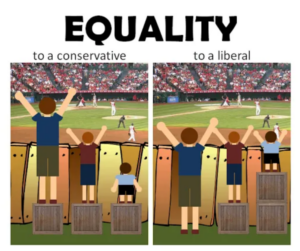
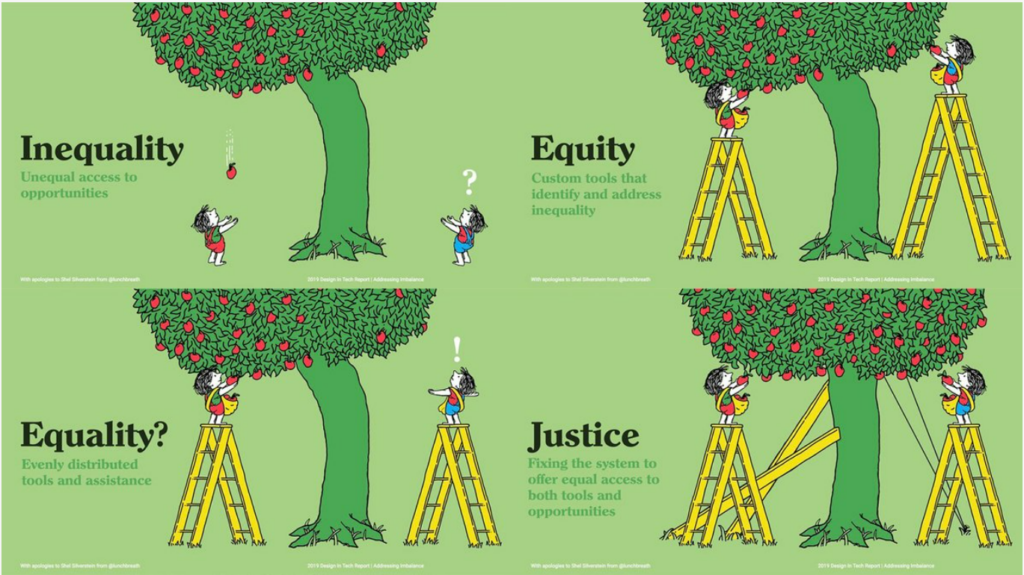
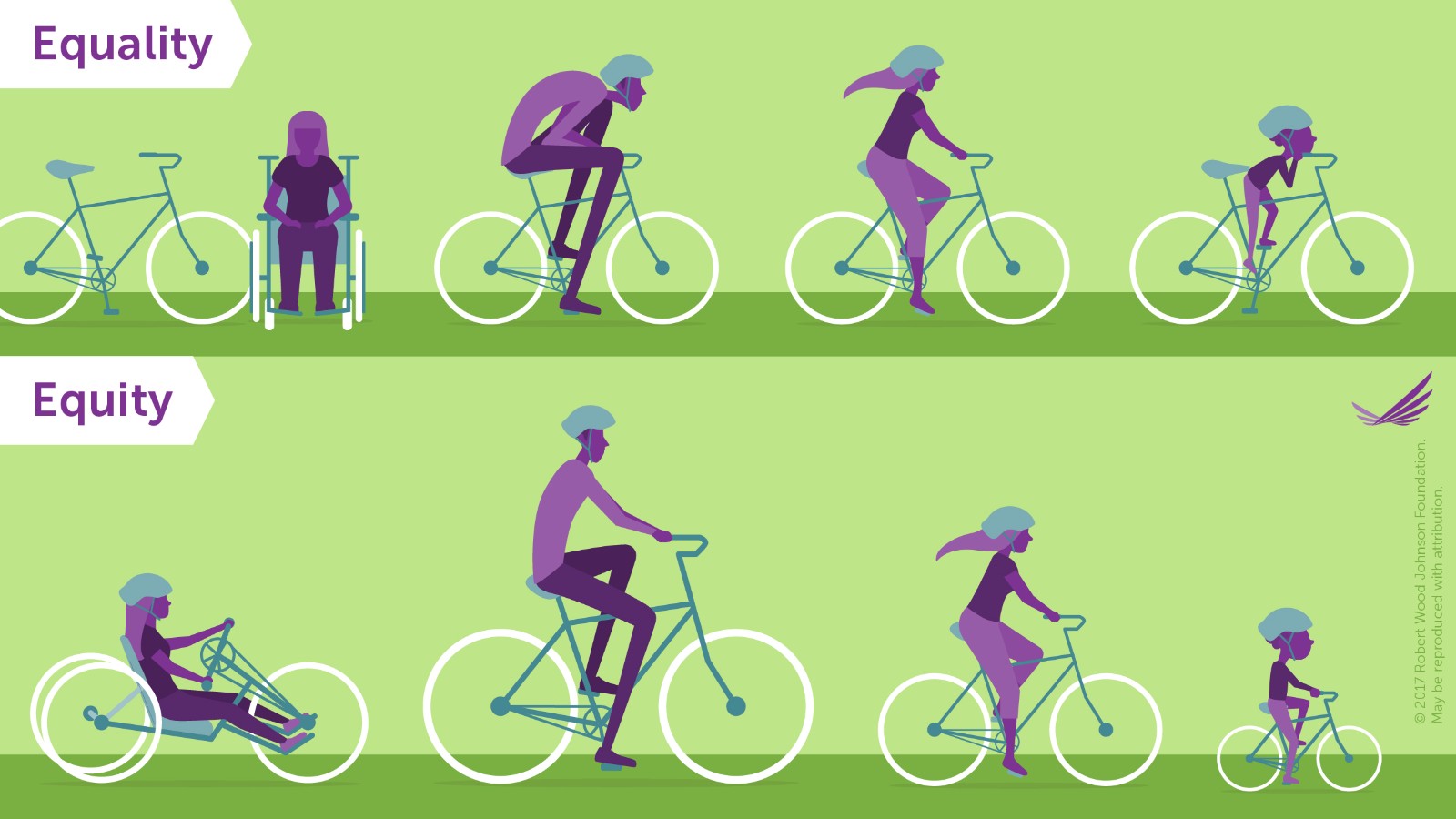
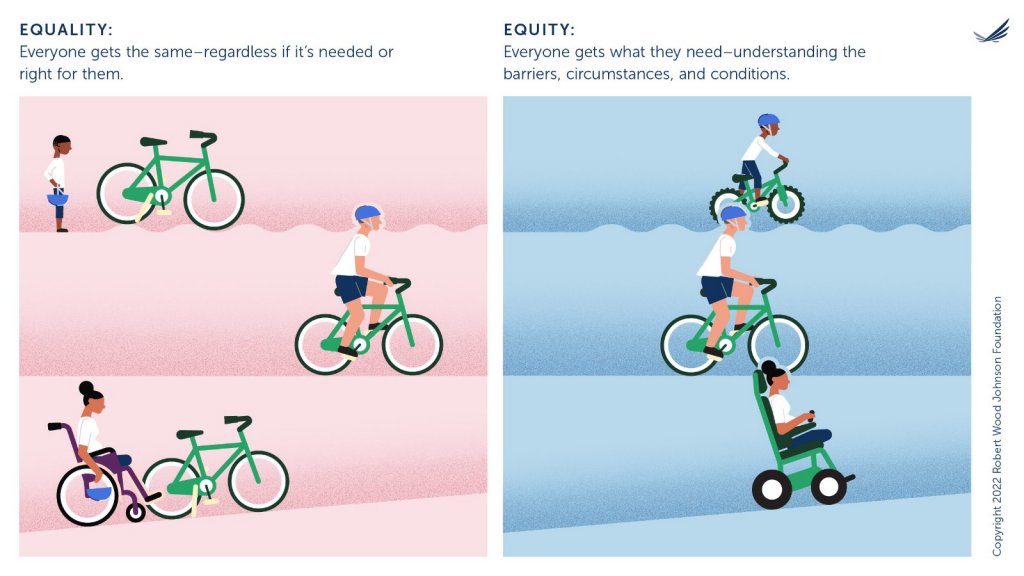
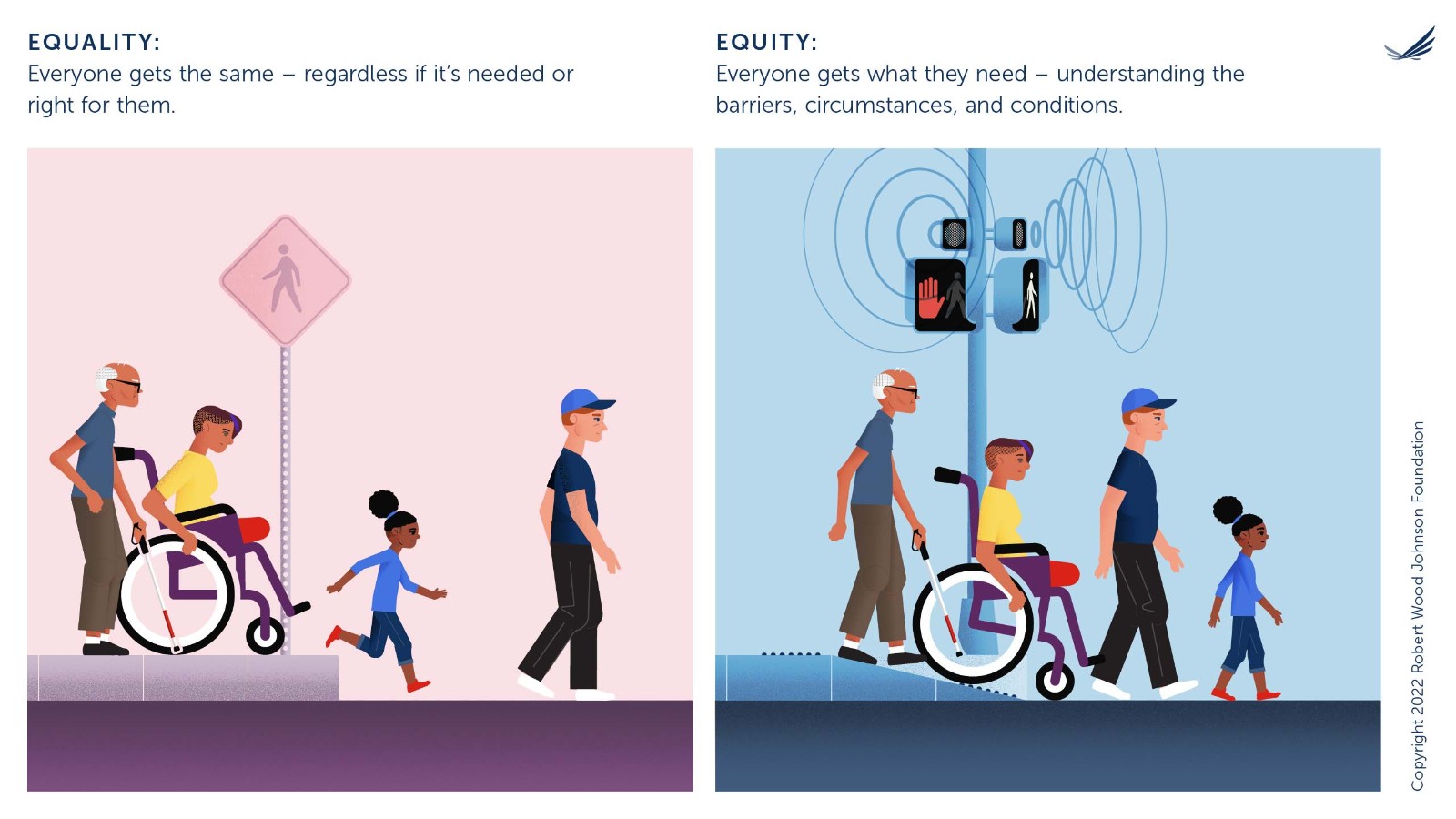
The International Womenâs Day (IWD) 2023 #EmbraceEquity campaign theme aimed to get the world talking about âWhy equal opportunities aren’t enoughâ. People start from different places, so true inclusion and belonging require equitable action. In simple graphics, many have tried to explain the difference between equality and equity on social media. Here are my top 5 equity infographics and how I think they have shaped the conversation on equity.
This image is one of the early images I have seen attempting to explain equity. The origins are debated, but by my best guess, it was created by a Boston journalist looking to explain a specific political standpoint using the analogy of watching his beloved red socks at Fenway Park. He tried to point out the two opposing policies to achieve equality. One by giving everyone the same help (one box) and the other by attempting to produce an equal outcome (all see over the fence). It has since been reproduced many times in various forms and re-captioned to equality vs. equity, with additional images to portray inequality (no boxes) and justice (no fence).
The apple tree image also has a few variants but attempts to define visually:

The last three are from the Robert Wood Johnson Foundation.
The first was a 2017 âbikeâ visual used widely across the USA and other countries. It succeeded in starting multiple conversations about equity with people young (elementary school) and older (workplaces).
Those many conversations led to feedback that reinforced the foundationâs view that this wasnât quite right. So, they refreshed it in 2022 and created a new âbikeâ and ‘curb’ visual.
Itâs an excellent example of how, even with the best of intentions, sometimes experts donât get it right the first time and that there is nothing wrong in refreshing an old idea.
Take a good look around you.
The first time I acknowledged all the privileges that led me to where I am (and not just my merit) left me feeling guilty, vulnerable, grateful, angry and helpless, amongst many others. Asking these questions can make us uncomfortable and bring on many emotions. I urge you to let yourself feel those emotions, be mindful of how you present them to others, and be kind to yourself and each other as we navigate these complex issues.
Welcome to the People Planet Profit Podcast.
I’m Hayley Jarick, CEO of the Supply Chain Sustainability School, and in this episode I’m joined with Meriel Chamberlin.
Meriel Chamberlin is the Founder of Full Circle Fibres and an active ACE Hub member. ACE Hub a program of Supply Chain Sustainability School Fellow Planet Ark. Meriel and Hayley discuss circular textiles, making an impact where you can, procurement, natural v synthetic fibres, extended producer responsibility, stewardship and Australian manufacturing capacity to turn fibre into yarn.
Publisher: Supply Chain Sustainability School Limited
Presenter/s: Hayley Jarick and Meriel Chamberlin
Podcast audio: People Planet Profit Podcast – Episode 36 | with Meriel Chamberlin
Welcome to the People Planet Profit Podcast.
I’m Hayley Jarick, CEO of the Supply Chain Sustainability School, and in this episode I’m joined with Filomena Beshara.
Filomena Beshara works in sustainability at Built. Built are an active member of the Materials and Embodied Carbon Leaders Alliance (MECLA) a program of Supply Chain Sustainability School Fellow WWFâs. They also collaborate with industry on circularity and are an active ACE Hub, a program of Supply Chain Sustainability School Fellow Planet Ark. Filomenia and Hayley have a yarn about adaptive reuse, design for disassembly, value retention, circularity, embodied carbon, collaborations, and Builtâs brown-to-green program.
Publisher: Supply Chain Sustainability School Limited
Presenter/s: Hayley Jarick and Filomena Beshara
Podcast audio: People Planet Profit Podcast – Episode 35 | with Filomena Beshara
Welcome to the People Planet Profit Podcast.
I’m Hayley Jarick, CEO of the Supply Chain Sustainability School, and in this episode I’m joined with Abigail Heywood.
Abigail Heywood is a National Sustainability Manager at Lendlease, a long-time Fellow of the Supply Chain Sustainability School. Abi and Hayley discuss how we decarbonise the construction industry. They talk about fossil-fuel-free construction, research findings, electrification, grid capacity, batteries, renewable diesel, biodiesel, mineral diesel, policy, Parramatta Powerhouse, Queensland Performing Arts Centre, and tips for subbies and suppliers who want to help.
Publisher: Supply Chain Sustainability School Limited
Presenter/s: Hayley Jarick and Abigail Heywood
Podcast audio: People Planet Profit Podcast – Episode 34 | with Abigail Heywood
Read the latest Supply Chain Sustainability School’s newsletter Manufacturing Update August 2023.
Packed full of business news including Do’s and Don’t of Manufacturing, the School’s latest podcast episodes, Fellow news, lots of free training resources, plus the School’s September Seminar Series and industry events.
by Hayley Jarick
Responsible manufacturing is a hot topic. In the B2C and B2B worlds, transparency demands are increasing threatening to expose all the dirty little secrets shamefully lurking in the shadows. Ethically, manufacturers have a choice; step up or shut down.
The success of Australia’s manufacturing industry in the future will be founded on three pillars; innovation, sustainability, and collaboration. The resulting vibrant ecosystem will foster knowledge-sharing, accelerate growth and drive Australia’s manufacturing sector towards unparalleled prosperity.
Here are my top ten doâs and donâts for sustainable manufacturing:
DO collaborate internally, as well as up, down and across your supply chain.
DO value all resources – no waste of any kind.
DO continually up skill your workforce.
DO cultivate a safe, fair, respectful and inclusive workforce.
DO align your efforts with the SDGs.
DO source your materials from responsible sources.
DONâT greenwash – ensure claims are backed by transparent and credible evidence.
DONâT directly or indirectly use forced labour or labour practices that violate human rights.
DONâT ignore the impact of manufacturing activities on local communities, biodiversity, and ecosystems.
DONâT be left behind.
by Hayley Jarick
In July 2023, David Grusch travelled to Washington USA to speak to the House of Representatives oversight committee. Under oath, he told them that the US government is harbouring non-human pilots and attempting to reverse engineer alien spacecraft.
Earthlings are obsessed with conspiracy theories and fictional stories depicting non-human species from other planets. War of the Worlds. ET. Close Encounters of the Third Kind. Predator. Alien. Superman. Mars Attacks. Independence Day. The Firth Element. Paul. Men in Black. Transformers. Contact. Star Trek. Star Wars. Edge of Tomorrow. 10 Cloverfield Lane. A Quiet Place. Avatar. District 9. The Host.
We fear aliens. We fear they will experiment on our species. We fear they will invade our habitat leaving us displaced. We fear they will bring diseases we cannot cure. We fear they will eradicate our species from this planet. We fear they will extract all our natural resources and leave Earth for dead. We fear they will enslave or feed off us until humankind becomes extinct. We fear they are parasites that will invade our communities or our bodies and take over. We fear they will pollute our air, water, food and atmosphere so we can no longer inhabit this planet.
We fear our reflection.
Humans experiment on other species. Humans invade the habitats of other species leaving them displaced. Humans engage in biological warfare. Humans eradicate other species from this planet. Humans are using ecological resources faster than the Earth can regenerate. Humans enslave animals and clear native vegetation to replace it with edible crops. Humans are polluting our air. Humans are polluting our waterways. Humans throw away food and leave other humans to starve.
âHuman activities, principally through emissions of greenhouse gases, have unequivocally caused global warming, with global surface temperature reaching1.1°C above 1850â1900 in 2011â2020. Global greenhouse gas emissions have continued to increase, with unequal historical and ongoing contributions arising from unsustainable energy use, land use and land-use change, lifestyles and patterns of consumption and production across regions, between and within countries, and among individualsâŠ
âWidespread and rapid changes in the atmosphere, ocean, cryosphere and biosphere have occurred. Human-caused climate change is already affecting many weather and climate extremes in every region across the globe. This has led to widespread adverse impacts and related losses and damages to nature and peopleâŠ
âClimate change is a threat to human well-being and planetary health. There is a rapidly closing window of opportunity to secure a liveable and sustainable future for all.â (IPCC AR6 2023).
The Supply Chain Sustainability School is seeking expressions of interest to establish a supply chain data-sharing function within the School’s platform. Stage One of the implementation will include collecting and sharing greenhouse gas emissions data to enable B2B scope 3 measurement and reporting.

The Supply Chain Sustainability School is seeking expressions of interest for its new advisory groups.
These groups will lead the collaborative charge to review existing and develop new learning resources, events and communications. We are on a mission for collaborative accessible education for a sustainable future with a goal of covering all industries across Australia and Aotearoa New Zealand by 2030.
If you know a thing or two that can help us on our way, please join one of our advisory groups. The group in no particular order are:
Industry-specific resources and growing the School to cover all industries by 2030
Environmental, economic and social sustainability topic revisions and new resource creation
School’s RAP, School’s policy development and member resources
Market-specific customisation, growth and resource creation.
Industry-specific customisation, growth and resource creation.
The Supply Chain Sustainability School Limited is hiring for a new role to support our Fellows and Members.
The dream position:
The dream organisation:
To apply send a cover letter (1 page) and resume (1-2 pages) to [email protected]
Applications open on 1 August 2023 and close when we find the right candidate.
Position:Â Sustainability Officer
Reports to:Â Chief Executive Officer (CEO)
Purpose of role: Customer support for Members and Fellows. Business development for new Fellows.
Primary duties and responsibilities (not exhaustive):
Other duties:
Qualifications:Â nil
Knowledge: nil
Experience:
Skills & competencies:
Essential
Desirable
Personal attributes
Other:
This job description illustrates the post’s scope and responsibilities and is not intended to be an exhaustive list of duties. You will be expected to perform other job-related tasks requested by management and as necessitated by this role’s development and the business’s development.
Welcome to the People Planet Profit Podcast.
I’m Hayley Jarick, CEO of the Supply Chain Sustainability School, and in this episode I’m joined with Chad Buxton.
Chad Buxton is the Partnership Manager at Huskee. Huskee is an active ACE Hub member and winner at the inaugural ACE Awards in 2022. ACE Hub a program of Supply Chain Sustainability School Fellow Planet Ark. Chad talks with Hayley about HuskeeSwap system model, how it works, as well as the differences and benefits for business. Chad and Hayley also touch on circular business models, reframing needs to develop innovative new solutions, scaling start-ups, and enabling smarter consumer choices.
Publisher: Supply Chain Sustainability School Limited
Presenter/s: Hayley Jarick and Chad Buxton
Podcast audio: People Planet Profit Podcast – Episode 33 | with Chad Buxton
Welcome to the People Planet Profit Podcast.
I’m Hayley Jarick, CEO of the Supply Chain Sustainability School, and in this episode I’m joined with Katrina Naish.
Katrina Naish is a Director at A Fitting Connection and an active ACE Hub member. ACE Hub a program of Supply Chain Sustainability School Fellow Planet Ark. Katrina chats with Hayley about fundraising with purpose, turning textile waste into revenue for schools or students to raise money for their nominated charities. They also discuss waste textiles solutions including reselling, repair and recycling as a last resort.
Publisher: Supply Chain Sustainability School Limited
Presenter/s: Hayley Jarick and Katrina Naish
Podcast audio: People Planet Profit Podcast – Episode 32 | with Katrina Naish
Welcome to the People Planet Profit Podcast.
I’m Hayley Jarick, CEO of the Supply Chain Sustainability School, and in this episode I’m joined with Ross Brookshaw.
Ross is a qualified Environmental Engineer who has been in the construction industry for 20 years in environmental, risk management and management system roles in a variety of companies and projects.
Ross is currently a Group Manager Environment and Sustainability at Downer and is particularly pleased with the relatively recent focus on decarbonisation, using science and emission data to influence company strategy and spend, product development and how we respond to community expectation.
Publisher: Supply Chain Sustainability School Limited
Presenter/s: Hayley Jarick and Ross Brookshaw
Podcast audio: People Planet Profit Podcast – Episode 31 | With Ross Brookshaw
Welcome to the People Planet Profit Podcast.
I’m Hayley Jarick, CEO of the Supply Chain Sustainability School, and in this episode I’m joined with Natalie Galea.
Dr Natalie Galea is a Senior Research Fellow at the Faculty of Architecture, Building and Planning at the University of Melbourne, and an adjunct senior research fellow at the Australian Human Rights Institute, UNSW Sydney.
Natalie studies human rights and gender equality in the construction sector and human rights and athlete abuse in elite sport. Her most recent research examined the effects of a five-day working week on the wellbeing of construction workers and their families.
Publisher: Supply Chain Sustainability School Limited
Presenter/s: Hayley Jarick and Natalie Galea
Podcast audio: People Planet Profit Podcast – Episode 30 | With Natalie Galea
Welcome to the People Planet Profit Podcast.
I’m Hayley Jarick, CEO of the Supply Chain Sustainability School, and in this episode I’m joined with Monique Isenheim.
Monique is Head of Market Development at the Infrastructure Sustainability Council (ISC). The ISC is a member-based peak body with the mission to ensure all infrastructure delivers social, cultural, environmental and economic benefits through a rigorous and comprehensive infrastructure sustainability standard. Monique also serves as a Board Member of the Supply Chain Sustainability School.
With over 15 years of experience working at the intersection of business and sustainability, Monique is particularly passionate about market-based solutions for growing investment into the Sustainable Development Goals. Monique has worked in for-profit and not-for-profit organisations in Australia, the US and Germany developing collaboration and business models that drive impact for people and planet – from supply chain sustainability to regenerative ventures.
Publisher: Supply Chain Sustainability School Limited
Presenter/s: Hayley Jarick and Monique Isenheim
Podcast audio: People Planet Profit Podcast – Episode 29 | With Monique Isenheim
Welcome to the People Planet Profit Podcast.
I’m Hayley Jarick, CEO of the Supply Chain Sustainability School, and in this episode I’m joined with Hudson Worsley.
Hudson is a co-founder of the sustainability consultancy Presync. Presync is a certified BCorp, specialising in innovative energy, carbon and climate solutions for the property sector. Hudsonâs career started as a management consultant with Arthur Andersenâs utilities team, then he worked inside TransGrid’s Risk and Audit Team before moving into sustainability in the development industry. He has led the sustainability team in Stocklandâs residential business and in 2015 he led and wrote, the City of Sydneyâs Climate Change Adaptation Strategy.
In 2020, Hudson co-authored the paper ‘The Time is Now: Decarbonising Building and Construction Materials’ which laid the foundation for MECLA which he co-founded with WWF and Climate-KIC and is chair.
Publisher: Supply Chain Sustainability School Limited
Presenter/s: Hayley Jarick and Hudson Worsley
Podcast audio: People Planet Profit Podcast – Episode 28 | With Hudson Worsley
Welcome to the People Planet Profit Podcast.
I’m Hayley Jarick, CEO of the Supply Chain Sustainability School, and in this episode I’m joined with Jim Green who is the General Manager, Strategic Procurement at John Holland.
Jim has worked in construction and engineering for his entire career, with extensive time spent in the infrastructure, building, mining, and oil and gas sectors. Not only does Jim have multi-sector experience he also has spent long periods of his life working outside Australia in far-flung locations such as the Highlands of Scotland, Houston Texas, Korea, and Mongolia.
Jim’s diverse experience has allowed him to deliver innovative procurement solutions that fit the environment in which they will be delivered, while focusing on the implementation of international best practices in the supply ecosystem.
Jim is also the new Chair of the Board of the Supply Chain Sustainability School in Australia and New Zealand.
Publisher: Supply Chain Sustainability School Limited
Presenter/s: Hayley Jarick and Jim Green
Podcast audio: People Planet Profit Podcast – Episode 27 | With Jim Green
Read the latest Supply Chain Sustainability School’s newsletter Modern Slavery Intensive.
A new type of newsletter – intensive course about Modern Slavery.
Various resources at different learning levels including beginners, intermediate, advance, expert and leader – and learn by listening, watching, reading or action.
Read the latest Supply Chain Sustainability School’s newsletter Retail Update.
Packed full of business news including How to start a sustainable retail journey, the School’s latest podcast episodes, Fellow news, lots of free training resources, plus School and industry events.
In case you missed it with the Christmas rush, read the latest Supply Chain Sustainability School’s newsletter Property Services Update.
This newsletter includes property services latest news, Fellow, industry and School news, the latest podcast episodes, training resources, events, account tips and more!
Welcome to the People Planet Profit Podcast.
I’m Hayley Jarick, CEO of the Supply Chain Sustainability School, and today I’m joined by Sandy Ng from KPMG, to talk about the Listening and Responding to Modern Slavery in Property and Construction guide developed in collaboration by The Property Council of Australia KPMG Australia.
This practical guide is for businesses for effective human rights grievance mechanisms. This guide unpacks the United Nations Guiding Principles on Business and Human Rights (UNGPs) eight criteria that should be applied when designing, implementing and reviewing effective human rights grievance mechanisms for your workplace. It also gives examples of grievance mechanisms in practice.
Publisher: Supply Chain Sustainability School Limited
Presenter/s: Hayley Jarick and Sandy Ng
Podcast audio: People Planet Profit Podcast – Episode 26 | Modern slavery in property and construction with Sandy Ng
Welcome to the People Planet Profit Podcast.
I’m Hayley Jarick, CEO of the Supply Chain Sustainability School, and this podcast episode is the fifth part of a five part Sustainable Property series talking about – things I wish you knew about sustainable property.
In this episode I am joined with, voice of a facility manager Jennifer Longstaff.
Publisher: Supply Chain Sustainability School Limited
Presenter/s: Hayley Jarick and Jennifer Longstaff
Podcast audio: People Planet Profit Podcast – Episode 25 | Sustainable Property series with Jennifer Longstaff
Welcome to the People Planet Profit Podcast.
I’m Hayley Jarick, CEO of the Supply Chain Sustainability School, and this podcast episode is the fourth part of a five part Sustainable Property series talking about – things I wish you knew about sustainable property.
In this episode I am joined with, voice of a material supplier Philippa Stone.
Publisher: Supply Chain Sustainability School Limited
Presenter/s: Hayley Jarick and Philippa Stone
Podcast audio: People Planet Profit Podcast – Episode 24 | Sustainable Property series with Philippa Stone
Welcome to the People Planet Profit Podcast.
I’m Hayley Jarick, CEO of the Supply Chain Sustainability School, and this podcast episode is the third part of a five part Sustainable Property series talking about – things I wish you knew about sustainable property.
In this episode I am joined with, voice of a builder Joe Karten.
Publisher: Supply Chain Sustainability School Limited
Presenter/s: Hayley Jarick and Joe Karten
Podcast audio: People Planet Profit Podcast – Episode 23 | Sustainable Property series with Joe Karten
Welcome to the People Planet Profit Podcast.
I’m Hayley Jarick, CEO of the Supply Chain Sustainability School, and this podcast episode is the second part of a five part Sustainable Property series talking about – things I wish you knew about sustainable property.
In this episode I am joined with, voice of an engineer Lauren Howe.
Publisher: Supply Chain Sustainability School Limited
Presenter/s: Hayley Jarick and Lauren Howe
Podcast audio: People Planet Profit Podcast – Episode 22 | Sustainable Property series with Lauren Howe
Recent Comments